Having suffered with misophonia for most of his life, Jason Vitiello didn’t know what to expect when he arrived at his first Misophonia Association convention two years ago. Connecting with others who understood his daily struggles provided immense validation, ultimately inspiring him to share his story.
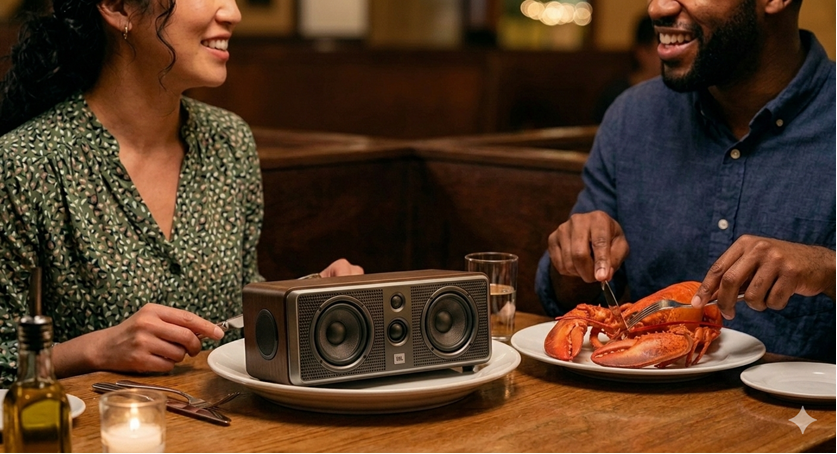
It’s a perfect day. You just joined your two best friends at an establishment you all love to frequent. At some point, both of your friends will abruptly excuse themselves, seemingly unprovoked. One friend has anaphylaxis, a severe, life-threatening allergic reaction to a specific allergen, which includes food, medications, and insect venom. The other friend has misophonia, an intense emotional and physical distress triggered by specific everyday sounds.
Hi. I am Jason, a 49-year-old male, and yes — as you may have guessed — I am the friend with misophonia. I use this basic scenario to set up what I like to call a “Sound Allergy.” While a food allergy is something I will never downplay or take lightly, I like to draw comparisons to help people understand my perspective on misophonia.
There are many diverse types and levels of allergies. A few are proven to be life-threatening and require immediate medical care. Some allergies are mild and cause a little discomfort — like my allergy to penicillin. Neurological conditions span a broad range. Some neurological conditions can be life-threatening to oneself and others — just turn on the news. Other neurological conditions are largely harmless, such as restless legs syndrome. Somewhere within that broad range is misophonia, a very real neurological disorder that is widely misunderstood. Why? Perhaps it’s because we can’t see it. Unlike our poor friend with anaphylaxis, who by now might be taking a ride in an ambulance, people with misophonia don’t break out in hives or show any redness. We don’t vomit or turn pale with sickness. I am thankful to have been spared the visible impacts of my condition. I am the type who, if my arms broke out in a rash, would pull my sleeves down to hide it. It is a silver lining to be able to walk away from a situation and make up any excuse I want, even though on the inside I am screaming. I am tormented. I am an involuntary victim of this neurological prison, for which there is no parole.
I try my best to describe my condition. At this point, I often find people’s reactions, honestly, comical. My favorite: “Oh! I have that too. I hate the sound of a baby crying on a plane.” Yeah, most of us do. Here’s another way to think about it: plenty of people dislike anchovies on their pizza, but they won’t end up in the ER if a slice touches their plate. For those of us with misophonia, our trigger sounds aren’t a mere dislike; they are a severe allergic reaction. The two experiences aren’t even in the same ballpark.
For me, the sound of an excessively barking dog can be annoying, just like it is for anyone else. It is not enjoyable, but it is not a misophonia trigger by any means. For me, the Sound Allergy is brought on when the dog goes for a drink. As with a food allergy, there is not much that can be done other than to stop the source. After that, the best thing anyone can do is simply be supportive in the manner that is best for that person with misophonia.
Having attended a couple of misophonia conventions, my medical understanding of the condition has not changed. It is something I have lived with for almost as long as I can remember, and I used to think it was impossible to learn anything new about it, especially from an outside perspective. However, my personal perspective has changed. The first time I met others with this condition was emotional on many levels. After a brief discussion and validation of our experiences, we walked away with an unspoken mutual respect — knowing that we utterly understood each other. This level of compassion cannot be given by even the closest loved ones in our lives. This mutual understanding goes beyond seminars and studies. The impact of misophonia can be described to anyone, but comprehended by few.
The definition of the word allergy is “an exaggerated, improper immune system response to normal, harmless substances.” If the word “substances” is replaced with “noises,” Sound Allergy would be a fairly close definition of misophonia.
These facts don’t suggest a reason to stop trying to communicate about misophonia, but to actually continue. I don’t believe there will be a cure in my lifetime. However, the effort to help others understand the everyday struggle must go on. For this reason, I came up with the term “Sound Allergy.” It seems to click with people. It separates the “I have it, too,” crowd from those of us who truly live with it. It gives a little more credence to the reality of this condition. It’s relatable. I find it to be the quickest, most effective way to drive home a meaningful description — a necessity in today’s fast-paced world.
Nothing is worse than spending untold minutes explaining misophonia to someone for the first time, only to get a blank stare, followed by, “I didn’t know that was possible.” It is as possible as any allergy. Until this condition is widely accepted and understood by science, medicine, and the general public, I will use whatever tools I have to help communicate this everyday reality. In return, I hope this analogy helps at least one other person who suffers as I do.
Recent Comments